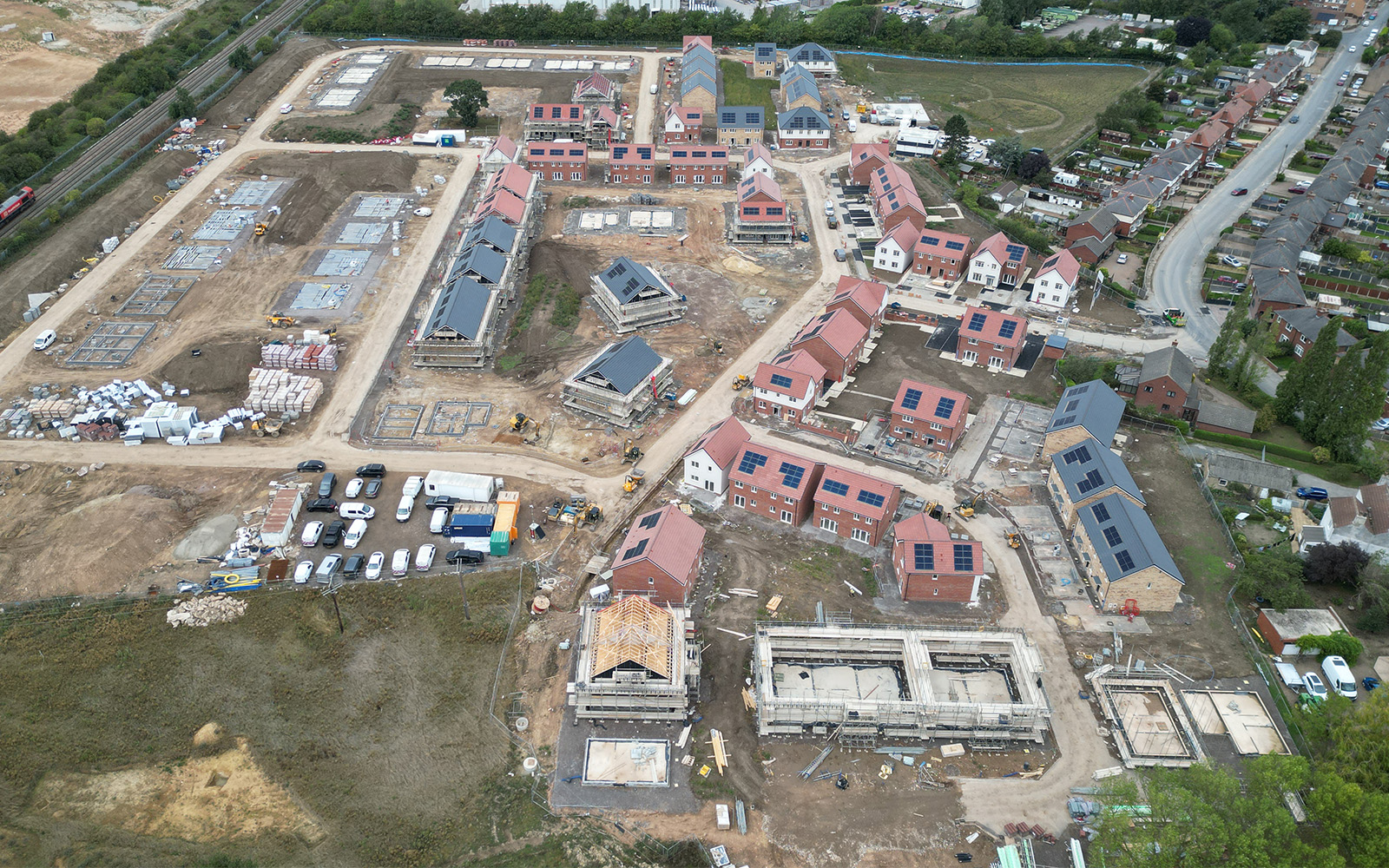
Many of our clients must weigh up the benefits of Timber Frame Construction against Traditional Masonry Construction when considering the path to take on upcoming projects and in general to meet the challenges in the UK Residential sector. The headline conclusions are familiar: that Timber frame offers faster construction, better energy efficiency, and lower environmental impact, while masonry provides superior durability, fire resistance, and soundproofing.
Growth on Timber Frame Construction
Timber framed construction has grown rapidly in the UK, as developers and contractors alike realise that it is now competitive on costs, but is also significantly faster than traditional alternatives, as well as carrying far more energy efficiency potential.
In 2021 and 2022 timber frame experienced over 30% growth and according to reports, this sustained growth is set to continue beyond 2026. Our client base has used timber frame construction more regularly in recent years, such as Vistry at their sites at Knottingley & Thorpe Willoughby and Gleeson at their site in Grantham.
Manufacturing off-site
Timber frame is an MMC (Modern Method of Construction) product, meaning that 90% of the product will be delivered to the site pre-constructed, depending on the design. This makes timber framing generally faster than other methods of construction. Once the foundations are in place, the timber frame can be erected in a matter of days allowing trades such as electricians and plumbers to get started with wiring and pipework, ready for the second fix elements to progress. The foundations are often engineered significantly lighter when supporting a timber framed dwelling; this is another potential cost-saving element to the build.
Masonry work, like bricklaying, may have to stop in rain or cold, while timber framing does not. The escalating cost, and lack of availability of traditional building materials, such as bricks, blocks, and concrete, is still an issue. Industry skills and manpower shortages in various building trades such as bricklaying is an ongoing issue too, so the option of quick supply and installation of pre-made components is especially appealing.
We recently visited Vistry Works Timber Frame factory near Coalville which was very enlightening to discover the method and process which goes into their timber frame developments. They are aiming to have windows pre-fitted in factory to take the ‘off-site’ elements to the next level and maximise all the benefits of pre-construction.
Timber frames and sustainability
Crucial to the recent resurgence in timber framing is the issue of sustainability. There are several reasons why timber framing helps meets sustainability targets. The timbers used are PEFC certified so it is an entirely sustainable construction material. Also, timber has much less embodied carbon than traditional building materials (41% less according to this study) and is also a carbon sink, holding carbon in a stable way for generations. The Vistry Development at Womersley Road for In Communities and Sigma utilises a Mauer 3mm ‘printed brick’ system for the external façade. This increases the pre-constructed element of the fabric which further reduces the on-site labour costs and embodied carbon in the completed units. Registered Providers like In Communities and Sigma have fully embraced this new technology where mainstream open market housing developers are not as keen to adopt this concept yet as major mortgage guarantors are not set up for it.
Thermal insulation and energy loss
Standard Assessment Procedure (SAP10.2) for new homes in England & Wales currently requires the thermal envelope to be modelled and evaluated for overall quality by a registered On-Construction Domestic Energy Assessor. The energy loss assessment is much easier to calculate and certify when pre-insulated panels are designed and manufactured off-site.
How expensive is timber frame construction?
Timber prices have fallen back to pre-pandemic levels while other materials continue to rise steadily in cost. But even before that, improvements in methods and materials had made timber framing the most economical option. A 2018 study by construction consultants RLB compared costs to traditional masonry, and found a saving, including prelims, of 2.8%, with a much shorter programme of works.